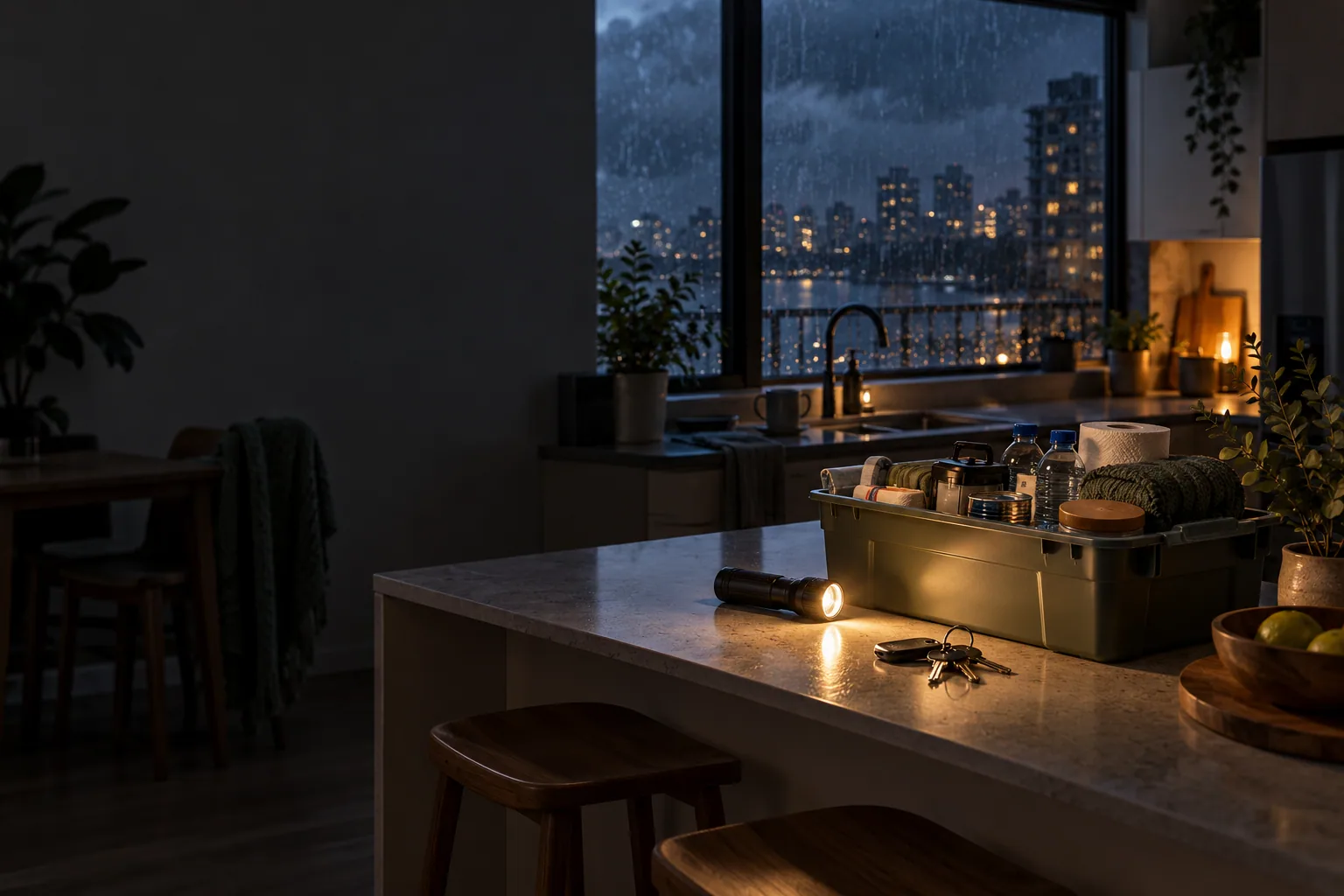
A household emergency kit often looks expensive because every item is shown as a new purchase.
That is the wrong first picture.
Emergency Victoria explicitly recommends doing a stocktake before shopping and notes that households may already have most of what they need. The useful job is to find it, test it and put it somewhere accessible.
Start in the kitchen
Look for shelf-stable food the household already eats.
Tins, dried food, long-life milk, snacks and other pantry staples may be useful if they can be eaten safely with limited cooking, refrigeration or water. Check that you have a manual can opener for tins.
Do not move all normal food into a sealed emergency box. A rotating pantry reduces waste and makes expiry management easier.
Check the junk drawer
You may find:
- torches
- spare batteries
- charging cables
- a lighter
- basic tools
- a pen and notepad
Test the torches. Match batteries to devices. Remove damaged cells. A collection of mystery cables is not a charging plan.
Check the bathroom and laundry
Find the first-aid kit and check whether it is complete and in date.
Useful hygiene items may already include soap, hand sanitiser, toilet paper, rubbish bags and personal-care supplies.
Medication and medical devices need an individual continuity plan. Do not place essential medicines into a forgotten kit or alter storage without professional advice.
Check the office
Important contact details, insurance information and identification may already exist in digital accounts or filing folders.
Create protected copies appropriate to your household. Keep a written contact list and do not put unnecessary sensitive information into a grab bag.
Check the camping shelf
If the household camps, it may already own lanterns, a radio, water containers, sleeping bags or safe outdoor cooking equipment.
Never move an outdoor fuel-burning appliance into an indoor plan. Use it only where the product and fire-safety guidance permit.
Check pet supplies
Leads, carriers, bowls, records, medication and normal food are the base of a pet plan. The gap is often organisation and transport, not a special branded product.
Make one useful zone
Australian Red Cross and Emergency Victoria both encourage keeping emergency items accessible.
Our practical suggestionChoose one shelf, cupboard or box for the non-food layer. Put a simple list on the inside. Keep rotating food in the pantry and water in safe storage nearby.
When the stocktake is finished, buy only the missing pieces that solve a real job.
That is the difference between preparedness and shopping.
Sources
General information only. Follow official emergency instructions. Requirements vary by household and emergency.